The hunt for professional qualification in animal tracking
Words by Richard James de Sao Jose, Career Course Student
All of human history is closely linked to our understanding of tracking and trailing animals. Our wits and ability to interpret signs and understand animal behaviour have been essential to our survival.
In a modern context, tracking and trailing are meaningful tools in conservation and guiding careers, making the Track and Sign aspect of the Career Course something I’ve looked forward to the most.
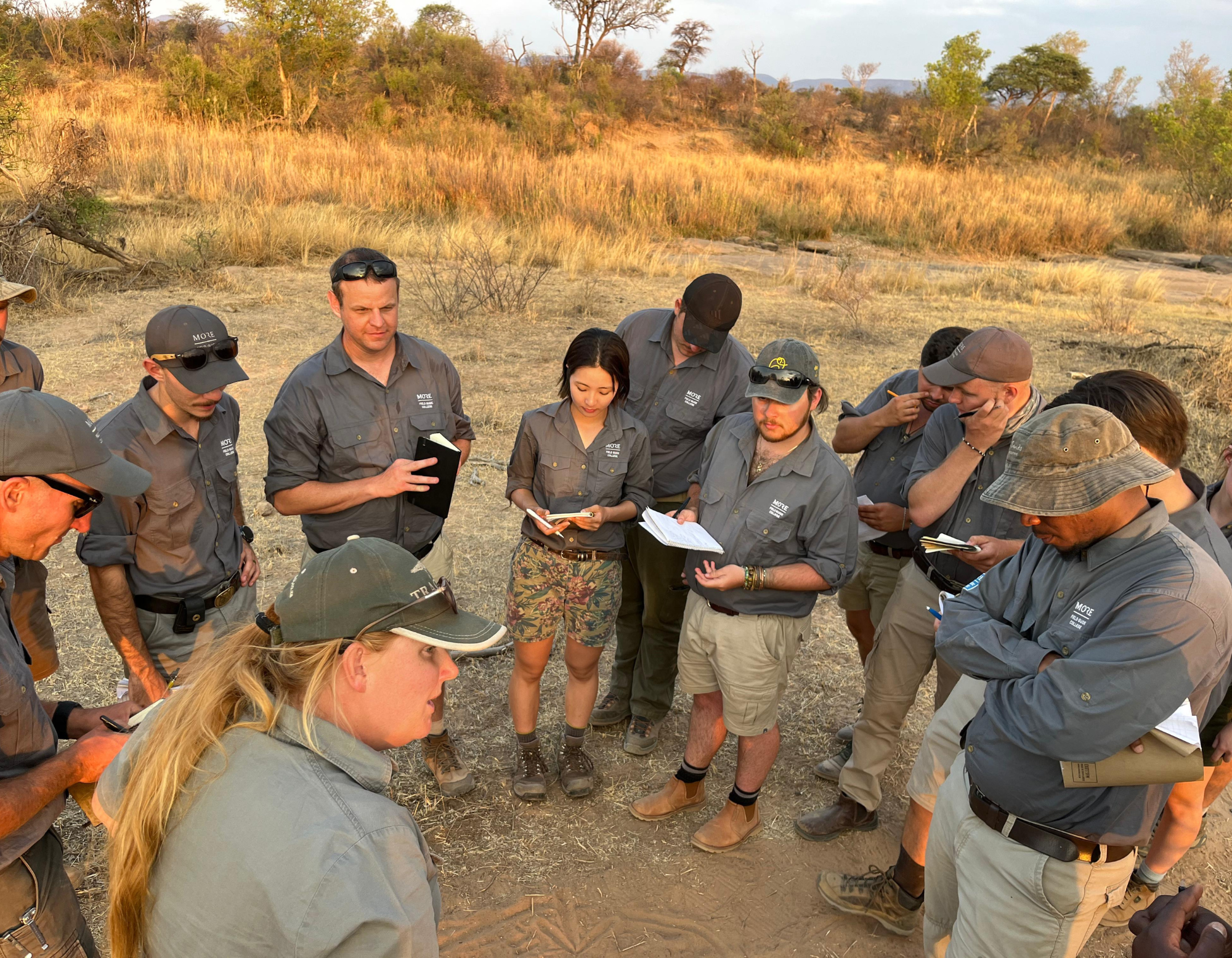
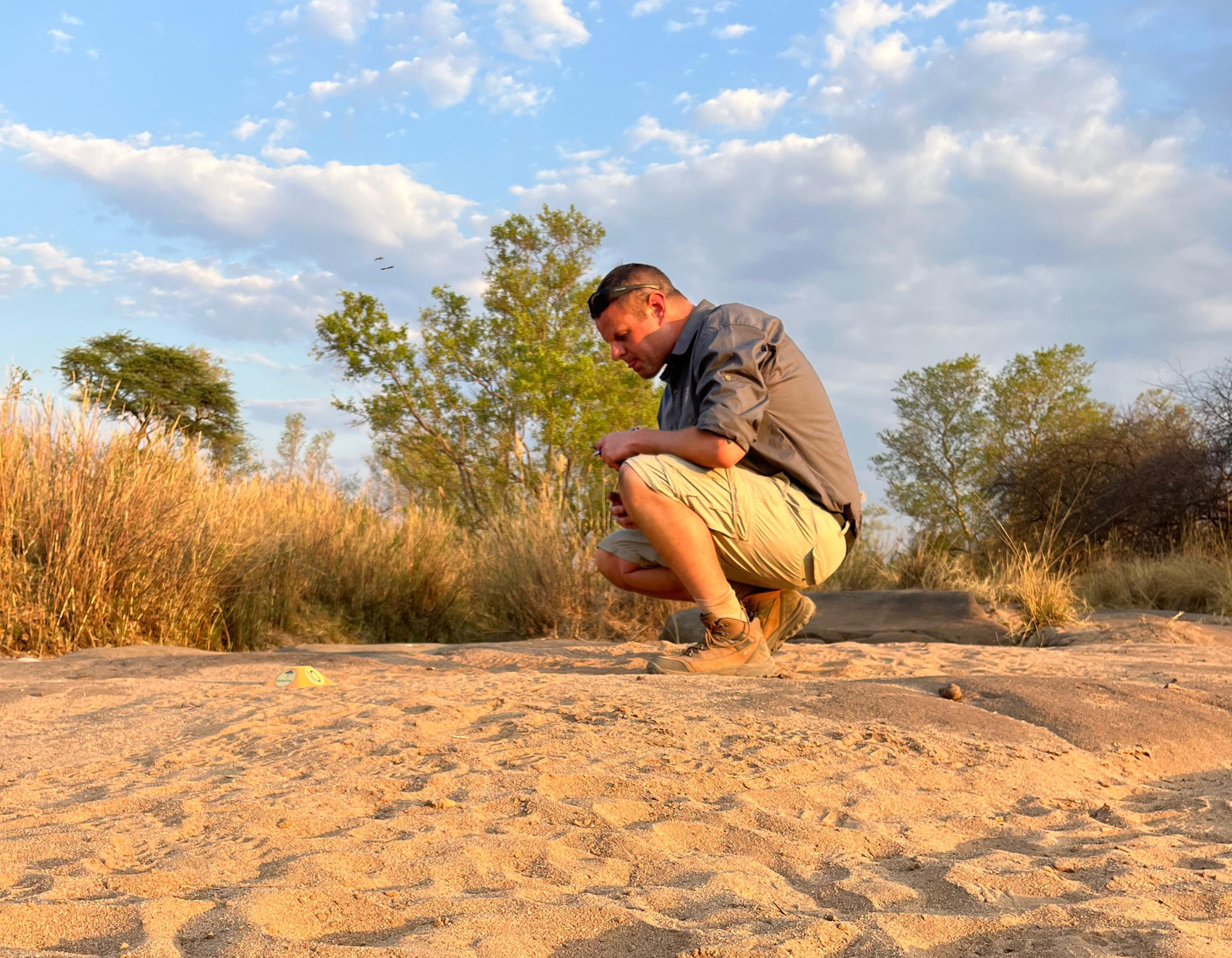
The course was broken up into a mix of class and field sessions. The classes concentrated on the process of eliminating certain species to help get to the answer by using unique characteristics of tracks, firstly focusing on things like whether there were pads and digits, hooves or bird tracks. Then moving on to individual characteristics of individual species, like stride lengths, overall track shapes, negative space and foot placement or registering.
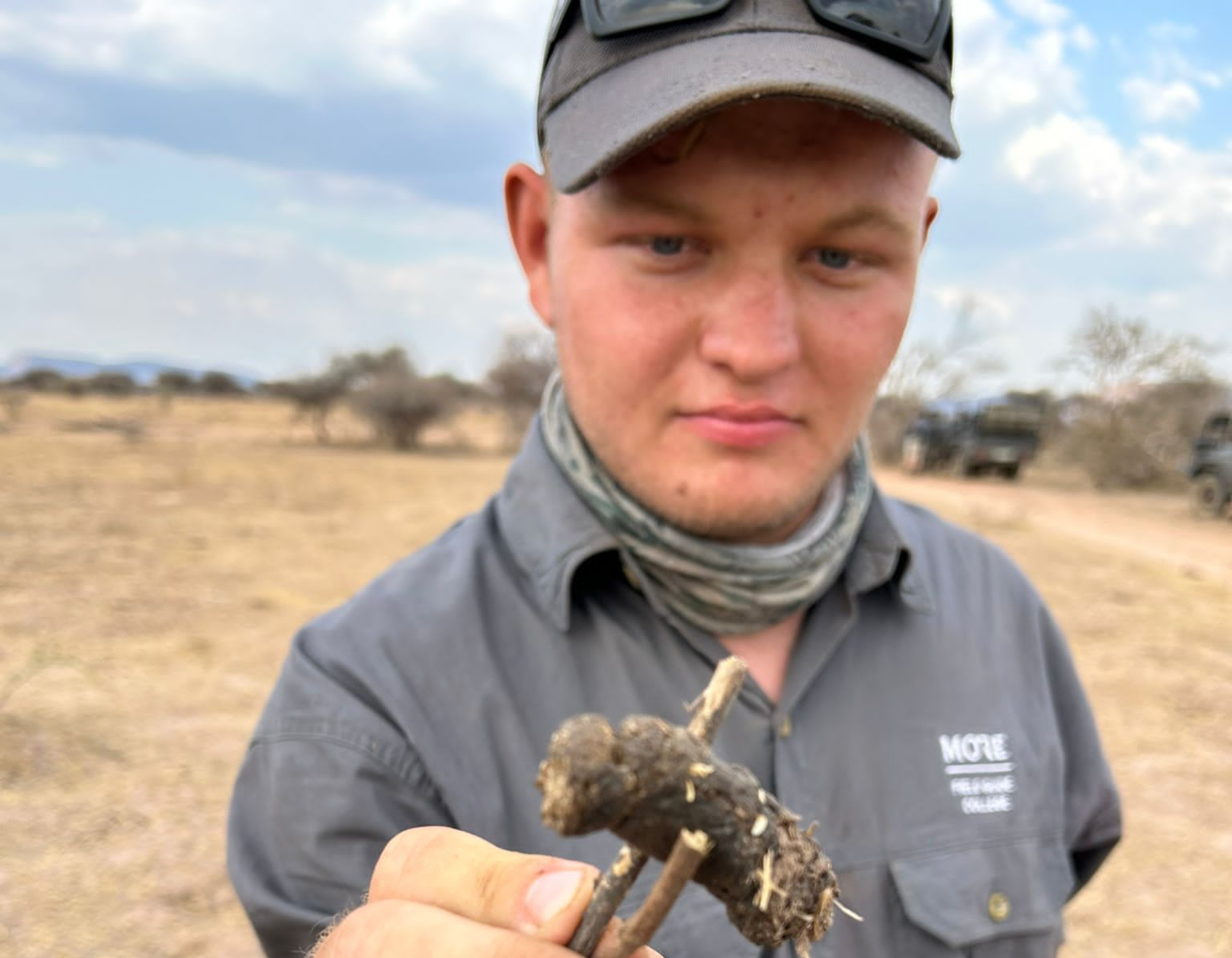
Other signs like scats, droppings, urine marking, rubbing posts and scrapes are also used to narrow down the possible species list. The field sessions are where the ABCs from the classes are applied, but lighting and substrate can make things tricky.
After getting all of the early tracks correct on the second day of the course, an incentive was offered if I could get the rest of the tracks for the session correct. This definitely sharpened my focus, and as we were divided up into groups to keep the numbers on each track down, our little group was sent out for the final 10 tracks for the day. I got lucky with an aardvark – the first sighting of this track during the course – and managed to get all of the tracks right for the day. Unfortunately, this luck wasn’t going to last into the final assessments.
In order to get a level of qualification, a minimum of 70% is needed on the final assessment, while 80-89% will get you level 2, 90-99% level 3, and a perfect score will get you the professional tracker qualification. With some experienced trackers in the group, there was a feeling that there might be a chance for at least one professional level being achieved in the group.
The assessment was held over two days, with the first day interrupted on a couple of occasions by a grumpy breeding herd of elephants. I made an early mistake with a bird track, but with the pressure off, I enjoyed the rest of my time out in the field and managed to walk away with level 3.
Going into the final day, there were still a few students with a perfect record. Going into the final 10 tracks, Tom Armitage, Mphilo Mashaba and Bricks Mabuza were still in with a chance of 100%. Unfortunately, they were all tripped up by a single track – but not the same one. A beetle, a steenbok and a dove were the culprits. Missing out on the professional level at that late stage must have been frustrating, but they all took it with good humour.
There were some mixed results after some difficult tracks, but everyone in the group managed to walk away with a qualification. It was an incredible achievement for Fred Bal from the Netherlands, who had only been in the country for a week and had never even seen most of the animals before, let alone their tracks. The effort that he put in, together with the brilliant instruction from Samantha and Elea from Colin Patrick Training, showed what can be achieved in such a short space of time.
The excitement of the chase that tracking brings will hopefully keep all of us continuously developing our skills. I’m happy with how things went, but I know that I will be chasing after that elusive professional level qualification at some point.